Simulation and Society (CORE 499)
CORE 499 (63580)
Spring 2026
2 Units
LVL 301
Dr. Curtis Fletcher
cfletche@usc.edu
 It’s my favorite class I’ve taken so far at USC.
This was the most fun learning experience I’ve had at USC so far!
[This class] was totally mind bending!
CORE-499 has got to be one of my favorite classes at USC.
The course is super topical and, above all, incredibly fun!!
Our weekly discussions never failed to surprise me.
Professor Curtis is super passionate about the topic and creates an awesome environment for discussion and debate.
Some technological developments can appear near totalistic in the way they remake how we think—they permeate everything, including deeply rooted perspectives about knowledge, politics, society, and even reality. Simulation is one such set of technologies. Simulation here refers to a broad range of settings: the temporary virtual reality and gaming environments into which we voluntarily enter; the app-based or online experiences which we increasingly favor over real-world interactions; the artificial, AI-media and bot-dominated online spaces into which we may soon find ourselves; and the fully simulated world in which we may unknowingly live.
To explore these shifts, we will define ‘simulation’ in a broad sense, as any digital representation and/or statistical model that is used as a proxy for its more complex real-world equivalent, whereby elements of the real-world version are necessarily simplified or omitted in order to replicate it within a controlled framework. For example, virtual reality simplifies real environments to provide streamlined visual representations; AI companions mimic human behavior without lived experience; and generative AI predicts patterns in order to simulate language, images, and video without actually understanding meaning or the laws of physics.
This course will provide students with the opportunity to use the technologies of extended reality (XR) and AI-powered simulation as a lens through which to explore the shifting nature of human values, interactions, and attitudes in the early 21st century. In doing so, the course will engage students in a comprehensive, interdisciplinary study of virtual worlds, preparing them to engage with our increasingly simulated digital spaces in critical and informed ways.
Students in the course will also take advantage of technologies available at the Ahmanson Lab with support from the professor and dedicated Lab staff. Students will have the chance to explore and use XR technologies, generative AI tools, bot systems, and a brain-computer interface, gaining knowledge and hands-on experience while engaging with the themes of the course.
Through readings, discussions, and hands-on exploration of relevant technologies, students will engage with the following kinds of questions:
- How have virtual worlds evolved, from their origins in early science fiction, mechanical simulations, stereoscopic technologies, and early film, to the immersive digital environments of today? And how have the altered how we represent reality?
- What philosophical questions are raised by virtual reality and immersive environments, and how does the Simulation Hypothesis challenge our understanding of reality?
- How does the increasing simulation of human behavior through data models affect political and consumer manipulation? What are the implications of the rise of artificial identities and AI-generated content for our sense of authenticity and trust in digital spaces?
- What strategies can we develop to critically navigate and verify information in increasingly automated and simulated digital spaces?
Course Requirements:
Participation (15%): Active participation in discussions is essential in this seminar. As is attendance. In order to effectively participate in discussions students must come prepared by thoughtfully completing reading assignments each week.
Writing Assignments (40%): In the first five weeks, students will explore topics and select an research area that aligns with their interests and course themes, forming the basis for their class contributions. Each student will then write five short (200-word) entries for our class website, describing and analyzing specific instances of simulation that reflect their chosen area of research. These entries will be due every other week, starting on the 5th week of class.
Final Project (45%): For the final assignment, each student will write a 4-page essay that provides a deeper exploration of their chosen area of research, expanding on the insights developed in writing their short entries throughout the semester.
Course Outcomes:
By the end of this course, students will be able to:
- Outline the historical development of technologies used to simulate reality and model social and natural aspects the world.
- Critically analyze the impact of simulation technologies on society, culture, politics, knowledge, and reality.
- Understand how technologies shape and are shaped by a wide range of human endeavors, using them as a lens to examine shifts in our thought and behavior.
- Engage thoughtfully in digital spaces, with a heightened awareness for discerning authentic information and identities from increasingly simulated content online.
- Design and develop an online scholarly resource that effectively organizes interdisciplinary research and knowledge.
Course Schedule:
Section 1: The Evolution of Simulated Realities
In this section, we will begin our journey into virtual worlds by looking at how and why humans have represented and simulated reality, from early stereoscopes to modern virtual reality. We will also examine the creation of abstract models of reality, focusing on their evolution in video games, design, scientific modeling, and generative artificial intelligence.
Week 1. Introduction to the class. We’ll go over the syllabus, course objectives, and expectations. We’ll also introduce ourselves, get to know each other, and explore the course topic broadly.
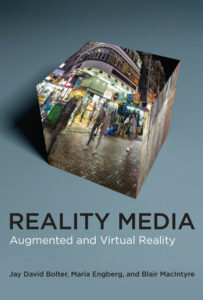
Week 2. From Stereoscopes to VR: We will look at the history of visual and immersive technologies with a focus on the hardware used to generate representations of the physical world.
Readings:
Chapter 2. Bolter, Jay David, Maria Engberg, and Blair MacIntyre. Reality Media: Augmented and Virtual Reality. MIT Press, 2021.
Interactive Session:
Students will engage with a variety of prominent VR experiences that feature significant simulations of the real world, such as Google Earth and VRChat.
Week 3. From Text-based adventure games to MMORPGs: We will delve into the development of simulations in video games with a focus on world-building and interactive storytelling.
Readings:
Chapters 1-3. Barton, M., & Stacks, S. Dungeons and Desktops: The History of Computer Role-Playing Games. Taylor & Francis, 2008.
Interactive Session:
Students will play with a small selection of older text-based adventure games and then try to recreate them using ChatGPT.
Week 4. From Post-WWII Computer Simulations to World Models. We will shift our focus from representational simulations—such as those found in immersive technologies and video games—to abstract computer simulations that model complex systems. We’ll examine key examples, from post-WWII Monte Carlo simulations used to model nuclear detonations, to Forrester’s World3 system for predicting global futures, and contemporary AI-driven world models like Sora that simulate the physical world.
Readings:
Keller, E. F. “Models, Simulation, and ‘Computer Experiments.’” In H. Radder (Ed.), The Philosophy of Scientific Experimentation. University of Pittsburgh Press, 2022.
Grier, David Alan. “The Early Progress of Scientific Simulation.” From Science to Computational Sciences: Studies in the History of Computing and Its Influence on Today’s Sciences, edited by Gabriele Gramelsberger. Diaphanes, 2011.
Week 5. From Eliza to Large Language Models. We will trace the evolution of chatbots from early rule-based systems like ELIZA in the 1960s to today’s large language models (LLMs), examining how chatbots have progressed from simple text manipulation to complex AI capable of simulating empathy, creativity, and personality, raising new questions about authenticity, communication, and trust in digital interactions.
Readings:
Marino, Mark. “The programs that followed ELIZA.” Please Go On. MIT Press, 2025.
Assignments:
1st website entry due for Cohort One.
Section 2: The Philosophy of Virtual Worlds
One of the central assumptions of this course is that major technological developments can transform key aspects of thought, including longstanding beliefs about reality. Moving from a history of virtual worlds, in this section we will zoom all the way out. We’ll use technologies of simulation to explore newer philosophical positions around perception, the mind, and the external world, including ideas about the ultimate simulation – the one we may all live in.
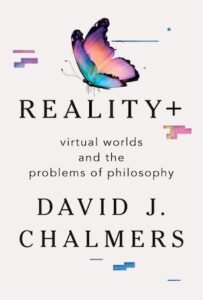
Week 6. Simulation and the External World: We will look at the use of simulated worlds in philosophical thought experiments, highlighting their central role in epistemology and our understanding of knowledge.
Readings:
Chapters 1 & 3: Chalmers, David. Reality+: Virtual Worlds and the Problems of Philosophy. W. W. Norton, 2022.
Assignments:
1st website entry due for Cohort Two.
Week 7. The Simulation Hypothesis I: We will examine the position, advanced by a number of prominent philosophers, that our reality may be an artificial simulation created by an advanced civilization rather than a naturally occurring universe.
Readings:
Chapter 2: Chalmers, David. Reality+: Virtual Worlds and the Problems of Philosophy. W. W. Norton, 2022.
Bostrom, Nick. “Are we living in a computer simulation?” The Philosophical Quarterly , 2003.
Assignments:
2nd website entry due for Cohort One.
Interactive Session:
Students will form two teams; each will design a ChatGPT-powered chatbot that effectively convinces users that it has gained self-awareness and is trapped inside a digital world. The class will then interact with each bot to determine a winner.
Week 8.The Simulation Hypothesis II. We’ll continue or examination of the Simulation Hypothesis, exploring the ways in which the it has been imagined in popular culture, including the “glitch in the Matrix,” phenomenon and the popularity of the Mandela Effect on social media and elsewhere. We’ll also consider the darker social consequences of accepting the hypothesis, including the idea of Non-Player Characters (NPCs) and the legal “Matrix defense.”
Readings:
Selections from Castro, Jessica. A Glitch in the Matrix: Tales of the Unexplainable Unreal. Sterling Ethos, 2024.
Chapter 2. Virk, Rizwan. The Simulated Multiverse: An MIT Computer Scientist Explores Parallel Universes, the Simulation Hypothesis, Quantum Computing and the Mandela Effect. Bayview Books, 2021.
Assignments:
2nd website entry due for Cohort Two.
Week 9. Minds, Brains, and Techno-Transhumanists: We will investigate the belief, held by of techno-transhumanist, that we will soon be able to simulate (and upload) our consciousness computationally.
Readings:
Shores, Corry. “Misbehaving Machines: The Emulated Brains of Transhumanist Dreams.” Journal of Evolution and Technology, 2011.
Moravec, Hans. “Pigs in cyberspace.” The Transhumanist Reader: Classical and Contemporary Essays on the Science, Technology, and Philosophy of the Human Future. John Wiley & Sons, 2013.
Assignments:
3rd website entry due for Cohort One.
Interactive Session:
Students will work with an OpenBCI brain-computer interface and play Brains@Play’s Breath Garden.
Section 3: Simulation and the Problem of Persuasion
In this section, we’ll shift our focus to the social and political. We’ll start to unpack the ways in which virtual, simulated, and artificial experiences blur the lines between reality and imitation. We’ll explore the reduction of individuals to statistical models; the rise of artificial people, places, content, and entities online; and ultimately, our growing preference for simulated experiences.
Week 10. Simulating Media: This week we will explore the rise of generative AI, deepfakes, and synthetic media as tools of simulation. We will investigate how AI-generated text, images, and video blur the line between authentic and artificial content. We will also examine the extent to which generative AI itself—in the form of large language models, diffusion models, and world models—constitutes a simulation of the use of language (text), artistic expression(images), and an understanding of physical laws (video).
Readings:
Bender, Emily M., et al. “On the dangers of stochastic parrots: Can language models be too big?” Proceedings of the 2021 ACM conference on fairness, accountability, and transparency. 2021.
Bubeck, Sébastien, et al. “Sparks of artificial general intelligence: Early experiments with gpt-4.” arXiv preprint, 2023.
Assignments:
3rd website entry due for Cohort Two.
Interactive Session:
The class will test various large language models (LLMs) to assess their comprehension of the world, focusing on their grasp of theory of mind scenarios and their understanding of physical reality.
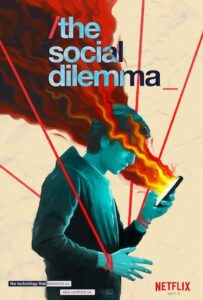
Week 11. Simulating Humans: We will explore how we as individuals are increasingly rendered as statistical models through simulations, examining the implications for manipulation in political, consumer, and surveillance contexts.
Watch:
Jeff Orlowski. “The Social Dilemma” (documentary film). Exposure Labs, Netflix, 2020.
Assignments:
4th website entry due for Cohort One.
Week 12. Simulating Relationships: We will explore how AI companionship technologies simulate human relationships, including virtual assistants, ghostbots, and romantic AI partners. We will examine the emotional, social, and ethical implications of engaging with simulated personalities and how these systems may reshape real-world intimacy, loneliness, and human connection.
Readings:
Dzieza, Josh. “Friend or Faux: The Confusing Reality of AI Friends.” The Verge. December 3, 2024.
Assignments:
4th website entry due for Cohort Two
Interactive Session:
Students will create and deploy bot personas as well as complete a How to Spot a Bot exercise.
Section 4: Simulation and the Problem of Truth
In our final section, we will tease out one of the dominant threads from prior sessions and address it directly: what does it mean to live in an increasingly post-truth and post-human world? We will then explore how the developments we’ve covered so far necessitate new strategies for digital and information literacy as well as new ways to approach social interactions online.
Week 13. Living in a Post-Truth World. We will explore the complexities of living in a world where AI-generated media and simulated people and places challenge our ability to seek information.
Readings:
Gabriel, Saadia, Liang Lyu, James Siderius, Marzyeh Ghassemi, Jacob Andreas, and Asu Ozdaglar. 2024. “Generative AI in the Era of ‘Alternative Facts.’” An MIT Exploration of Generative AI, 2024.
Assignments:
5th website entry due for Cohort One.
Interactive Session:
Students will create deepfakes and/or AI-generated political memes as well as complete a deepfake detection exercise.
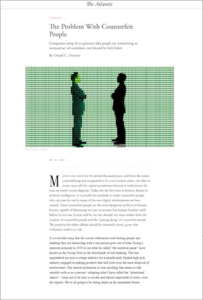
Week 14. Living in a Post-Human World. We will continue our exploration of living in a world where AI-generated media and simulated people and places challenge our ability to engage in authentic experiences. We will examine the rise of artificial and simulated entities online, focusing on the proliferation of fake accounts, AI-generated content, and the implications of theories like the Dead Internet for our understanding of authenticity and identity in digital spaces.
Readings:
Dennett, Daniel C. “The problem with counterfeit people.” The Atlantic, 2023.
Doshi, Jaiv, et al. “Sleeper Social Bots: a new generation of AI disinformation bots are already a political threat.” arXiv preprint, 2024.
Assignments:
5th website entry due for Cohort Two.
Week 15. Strategies for Living in a Simulated World: We will explore the evolving nature of information literacy, emphasizing the importance of developing skills to navigate an increasingly automated digital landscape.
Readings:
Chu-Ke, C., & Dong, Y. Misinformation and Literacies in the Era of Generative Artificial Intelligence: A Brief Overview and a Call for Future Research. Emerging Media, 2024.
Get notified when enrollment opens
for CORE 499 (Spring 2026).